Record Drone Sightings Forced Wildfire Airspace Shutdowns Last Year
Unauthorized flights around fires halted aerial support and raised collision risks for pilots and crews.
2 min read
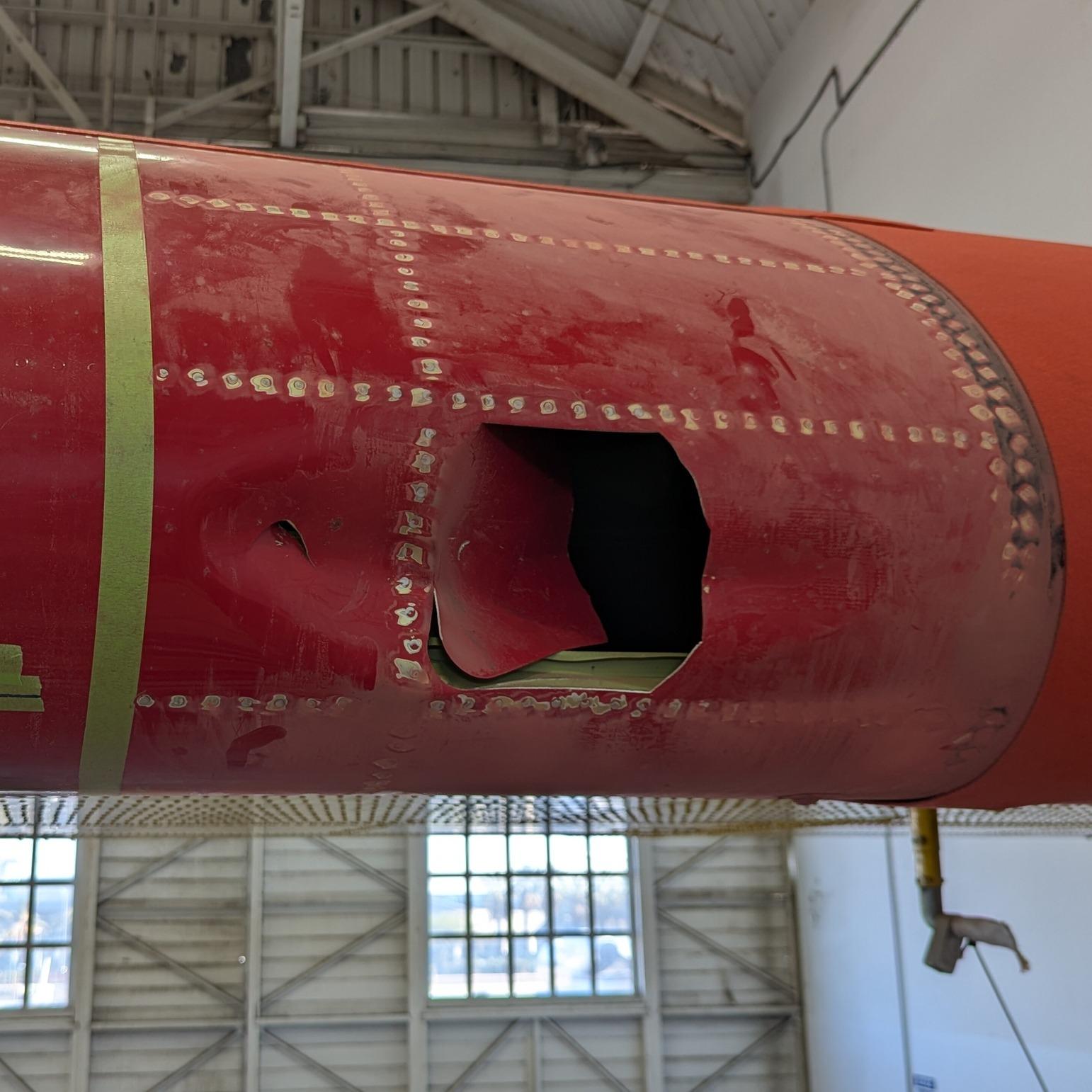
A collision with an unauthorized drone left a 3-inch by 6-inch hole in the left wing of a “super scooper” aircraft last year. Credit: U.S. Forest Service.
UNITED STATES — According to a report released on April 23, the U.S. Forest Service documented 218 drone sightings over active wildfires throughout 2025. This figure exceeds the total of 125 incidents reported nationwide across the prior seven years. The vast majority, 184 sightings, took place inside restricted airspace during the Eaton and Palisades fires near Los Angeles.
On January 9, 2025, a small consumer drone collided with a Super Scooper firefighting aircraft during operations at the Palisades Fire near Malibu. The impact punched a three-inch by six-inch hole in the aircraft’s left wing. The plane landed safely but remained out of service for several days while crews completed repairs. Federal authorities later charged the operator, a 56-year-old Culver City man, who agreed to plead guilty to unsafe drone operation and to pay more than $65,000 in restitution.
Every unauthorized drone forces fire managers to immediately shut down the entire temporary flight restriction zone. All firefighting aircraft, including airtankers, helicopters, and water scoopers, must stop operations for safety. Pauses can last up to 15 minutes per sighting while crews verify the threat has passed. These interruptions also ground air medical evacuation flights that support injured responders.
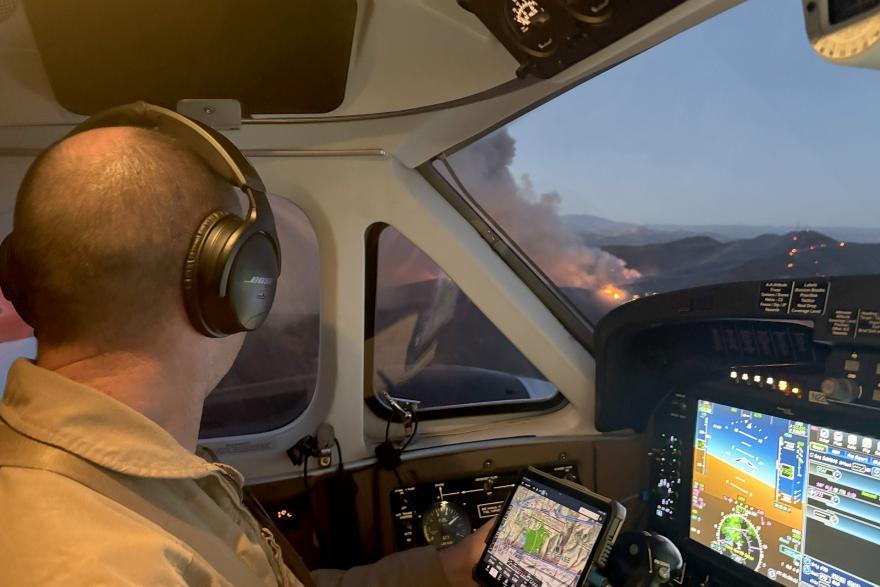
Dave Mundwiler, a lead plane pilot, during a recent mission in the lead wildfire response plane. Credit: David Mundwiler, U.S. Forest Service.
Complex fire operations amplify the disruption. During the Palisades Fire, nine helicopters and roughly 10 airtankers worked in coordinated rotations to drop retardant and water. Lead plane pilot Dave Mundwiler described the speed and visibility hazards. “We’re about 150 miles per hour. So just imagine hitting anything at 150 miles per hour,” he said. “Have you ever almost hit a bird in your car when you’re driving down the road? Do you always see it coming or does it flash in front of you? That’s exactly what it’s like in an airplane.”
Assistant director of aviation safety Lyndsay Johnson stated that actual intrusions probably exceed reported figures because detection depends on visibility and available equipment. The Forest Service has increased its own authorized drone flights on incidents by 2,483% since 2019 to gather intelligence. Officials formed a counter-unmanned aircraft systems task force after the January collision to improve detection and tracking of unauthorized operators.
Operating a drone inside wildfire-restricted airspace remains a federal crime. Penalties include fines up to $20,000 and up to one year in prison. The Forest Service continues to warn the public that such flights endanger pilots, crews, and the communities firefighters protect.