On this page
Loyalton Ends Probation Lease, County Searches for Space
Officials say no explanation preceded the termination notice.
7 min read
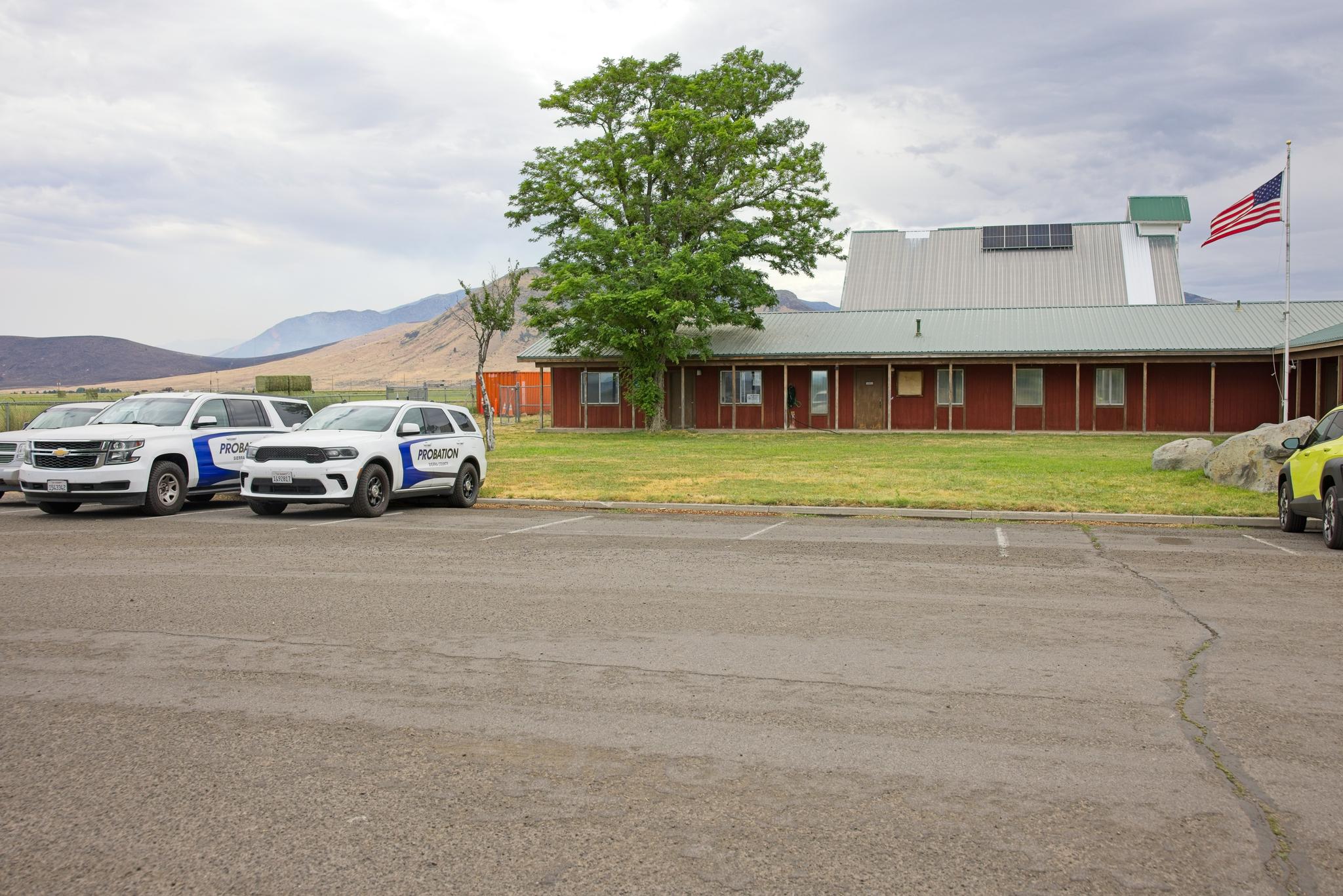
The Social Hall in Loyalton, currently tenanted by the Sierra County Probation Department. The building also hosts half of the county’s Board of Supervisors meetings.
LOYALTON — Sierra County’s Probation Department must leave its office in the Loyalton Social Hall by October 31 after the City of Loyalton gave notice terminating a lease dating back to 2017. County officials, who discussed the decision at Board of Supervisors meetings July 7 and July 21, said the notice came as a surprise, and no city official had directly explained the decision to the Board.
Mayor Joy Markum signed the June 30 termination letter, which was sent by certified mail to the clerk of the Board and received July 6. The one-page letter identifies the leased space as the approximately 1,344-square-foot north wing of the one-story Social Hall building at 105 Beckwith Street, along with shared access to walkways, landscaping, parking, and restrooms. It invokes the agreement’s early-termination provision but gives no reason for ending the lease.
The original agreement required at least 120 days’ notice for an early termination. County Counsel Andrew Plett told supervisors the city had satisfied the notice requirement and the county should regard the October 31 termination as effective, although he questioned whether the lease clause authorizing the mayor to administer the agreement permits unilateral termination without City Council action.
Why the location matters #
Probation is now the only county department based in the leased wing, though Information Technology and Social Services have also occupied space in the building. Chief Probation Officer Chuck Henson said the office gives people under supervision a private place to report and receive services in Loyalton, including duties connected to California’s CalAIM Medi-Cal initiative. Some clients can walk there, reducing the time and expense needed for county employees to find and transport them.
Henson also emphasized the office’s proximity to three schools, a daycare provider, the city park, and Little League fields. Probation officers have provided security and responded to incidents at nearby sites, and Henson said the department is identified as a primary responder for school incidents because officers can arrive on foot.
Sierra-Plumas Joint Unified School District Superintendent Sean Snider supported keeping probation nearby during the July 21 meeting. “We do highly value having probation so accessible to our schools,” Snider said, adding that the district does not employ school resource officers. He offered to participate in efforts to preserve the arrangement or find another site.
The Social Hall is also Sierra County’s eastern location for Board of Supervisors meetings. The termination applies to the probation office lease, not expressly to the Board’s use of the hall, but Supervisor Sharon Dryden said the county should find another meeting place if probation is forced out. Without a suitable eastern venue, she said, the Board may have to conduct all its meetings in Downieville.
The county has even considered purchasing the Social Hall in the past, going so far as to commission a building inspection, document accessibility and repair needs, review comparable sales, and make an offer. Dryden said the city rejected the offer and considers the building an asset it does not want to sell.
A new draft without an explanation #
The termination followed months of disagreement over a replacement lease. Henson said he found the draft on his desk March 26 without a cover letter and learned the county had not received it through its usual channels. He forwarded the document to county counsel, who contacted the city attorney.
The existing lease took effect March 29, 2017, for a five-year term. Its holdover clause converted the arrangement to a month-to-month tenancy after the term expired in 2022. The county pays $1,000 per month and receives a $100 monthly rent credit because its offices and the Social Hall share one electric meter, while the county pays the electric bill, Henson said.
The proposed lease sets rent at $1,800 per month and requires the city to send the county a monthly bill. Supervisors and county staff described the increase as nearly doubling the existing rent.
The document otherwise offered a five-year term and a possible one-year renewal with the city’s consent, but either side could terminate it on 30 days’ written notice. It would also charge the county half of the Social Hall’s utility bills, restrict county use of the hall to three times per month with written permission, and give city events priority.
County officials said the allocation of building costs and risk concerned them more than the rent increase. The proposed lease warns that the premises may not comply with the Americans with Disabilities Act (ADA), requires the county to determine whether the building is suitable, and makes the county responsible for permits and costs for work performed on the premises. A “net lease” provision broadly assigns the tenant costs for maintaining and operating the premises, including construction, alterations, repairs, reconstruction, and replacements, unless another clause expressly provides otherwise.
The 2017 agreement already assigns the county responsibility for utilities, routine interior maintenance, and ADA obligations connected to its use. The city, however, was responsible for major roof, exterior siding, and fire-alarm repairs, as well as the cost and performance of work undertaken by the city. The new draft retains some city responsibility for major repairs but allows the city to postpone or cancel work it decides is not in its best interest, while other clauses place broader costs and responsibility for work on the county.
Henson and Plett said the county was willing to pay more but would not accept what they viewed as a broad transfer of risk for an aging building it does not own. “It’s unreasonable to expect a tenant to do improvements on a building that they don’t own,” Supervisor Dryden added July 21.
After the city rejected an initial county counteroffer, supervisors authorized a second offer with higher rent while continuing to reject the expanded liabilities. Plett said the city had apparently already issued its termination notice before he transmitted the second proposal. Officials did not state either counteroffer’s dollar amount during the two public discussions.
Lack of communication between city and county #
Although the city and county attorneys exchanged messages, Board Chair Paul Roen said July 21 that no city representative had contacted him or, to his knowledge, another supervisor in an official capacity. Roen said July 7 that at least one City Council member he contacted appeared unaware of the termination. Henson said he searched the city’s website and found no council agenda item concerning the action.
Roen described a chain of documents instead of a conversation between the two governments: the draft was left at the probation office, the county responded through counsel and counteroffers, and the next document was the termination letter. “I have not been contacted by anybody all year,” Roen said July 21. “I was shocked.” Supervisor Terry LeBlanc said July 7 that the matter should be placed on a City Council agenda so residents could understand what was happening, while Roen urged council members to convene and discuss the decision.
County begins looking elsewhere #
Supervisors revived an existing Social Hall ad hoc committee July 7 to examine alternatives. By July 21, Dryden and Henson had toured another building that Dryden called a “very viable option,” but the property’s representatives still needed approval from their board. Officials did not publicly identify the building.
Henson warned that Loyalton has few suitable offices and probation could lose its presence in the city if the county cannot secure a workable alternative. Supervisors also discussed temporary modular offices and other county or school properties, but made no decision.
Dispute threatens broader city-county relationship #
The lease dispute also led supervisors to examine the broader division of costs and services between Loyalton and Sierra County. Sheriff Mike Fisher said July 7 that the governments’ law-enforcement agreement has not been renegotiated since 2009, even as the cost of providing service has increased. Loyalton pays about $2,500 per month, and slightly more than $100,000 in annual state COPS grant funding goes to the county. Fisher stressed that he and Roen began discussing a review of the agreement before he learned of the lease termination.
Sheriff’s Office staff recorded 632 calls for service within city limits during the year ending July 1, a total that included fire dispatches and calls that did not require a deputy response. The office also made seven custodial arrests. Fisher said the county absorbs the resulting investigation, booking, jail, transportation, and court costs; the county pays Nevada County $136 per day to house an inmate.
Supervisor Lee Adams offered a population-based comparison July 21, saying about one-quarter of Sierra County’s residents live in Loyalton. With the Sheriff’s Office budget approaching $4 million, he argued that a proportional city contribution would approach $1 million per year. The city’s monthly payments and the state grant amount to roughly $130,000 annually, based on figures given during the meetings. Adams also said similar contracts elsewhere often bill cities separately for booking fees and inmate-transportation mileage, while Sierra County recovers neither cost from Loyalton.
Roen said the county is conducting a five-year time study to determine the actual cost of serving Loyalton. Supervisors took no action on the law-enforcement agreement during either lease discussion.
The Board plans to keep the lease on its agenda while the ad hoc committee pursues alternatives. The Mountain Messenger reached out to the City of Loyalton for comment but has not yet received a response.