New Deputies Complete Academy Training Across Region
Graduates are moving into service with local sheriff’s offices.
3 min read
SIERRA COUNTY — New deputies are entering sheriff’s offices across the region after recent academy graduations at College of the Siskiyous, Butte College, and Sacramento-area training programs. The announcements include a new Sierra County deputy with Downieville roots, two Plumas County deputies recognized this week, and new graduates announced Nevada and Placer counties.
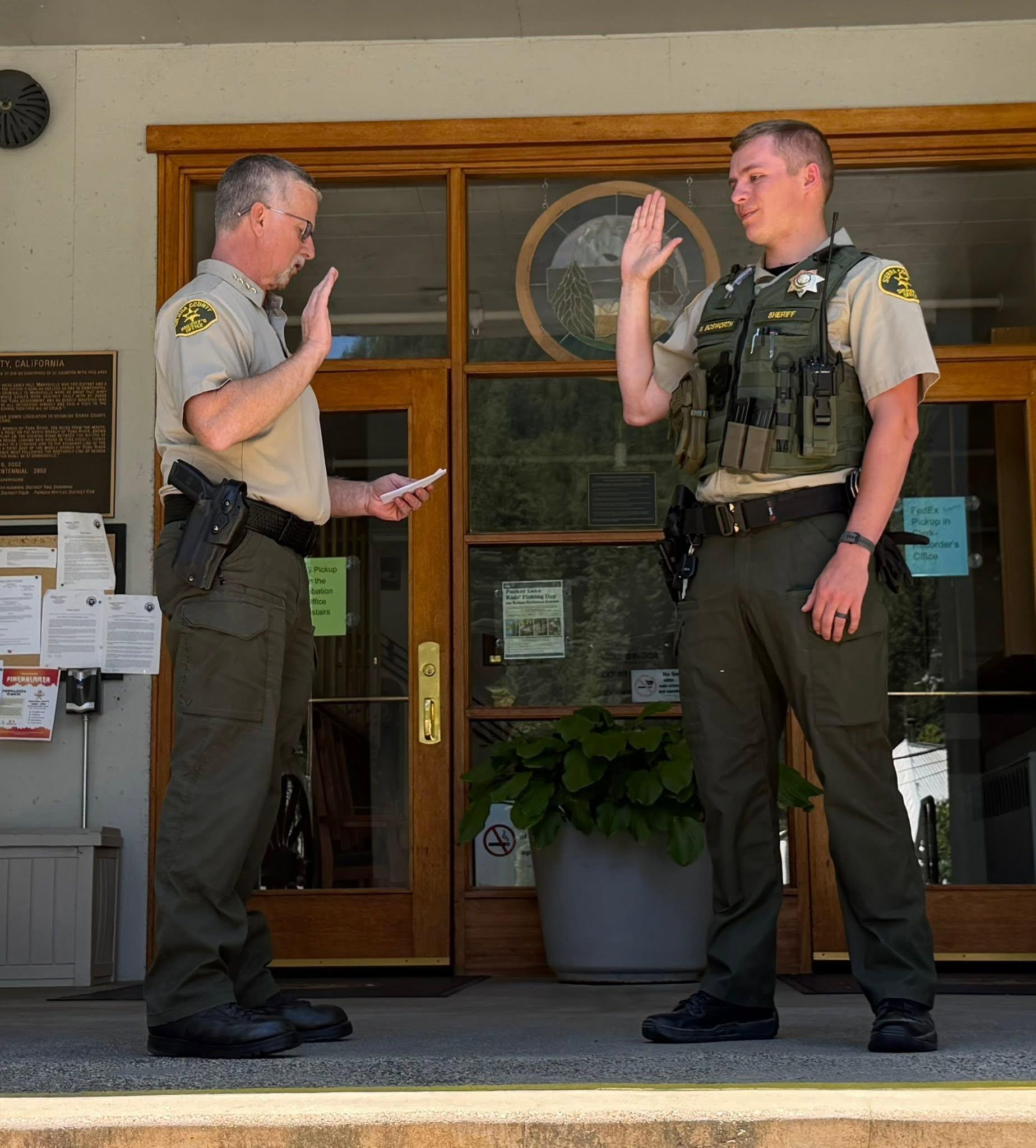
Sheriff Mike Fisher swears in Deputy Bosworth following his academy graduation.
The Sierra County Sheriff’s Office welcomed Deputy Bosworth as its newest deputy after his graduation from the College of the Siskiyous Law Enforcement Academy. Bosworth is a Downieville High School graduate and the son of retired Sierra County Probation Chief Jeff Bosworth, continuing a family connection to public service in Sierra County.
The Sheriff’s Office said Bosworth is beginning his law enforcement career serving “the community he calls home.” Sheriff Mike Fisher has said separately that Bosworth will primarily be stationed in western Sierra County, placing him in the area where he has long-standing local ties.
Sierra County uses the College of the Siskiyous academy for recruits entering the California POST basic course. The academy is an intensive modular program in which cadets complete Modules III, II, and I in sequence. College of the Siskiyous says completion of all three modules fulfills the minimum training requirements for employment in California as a full-time peace officer.
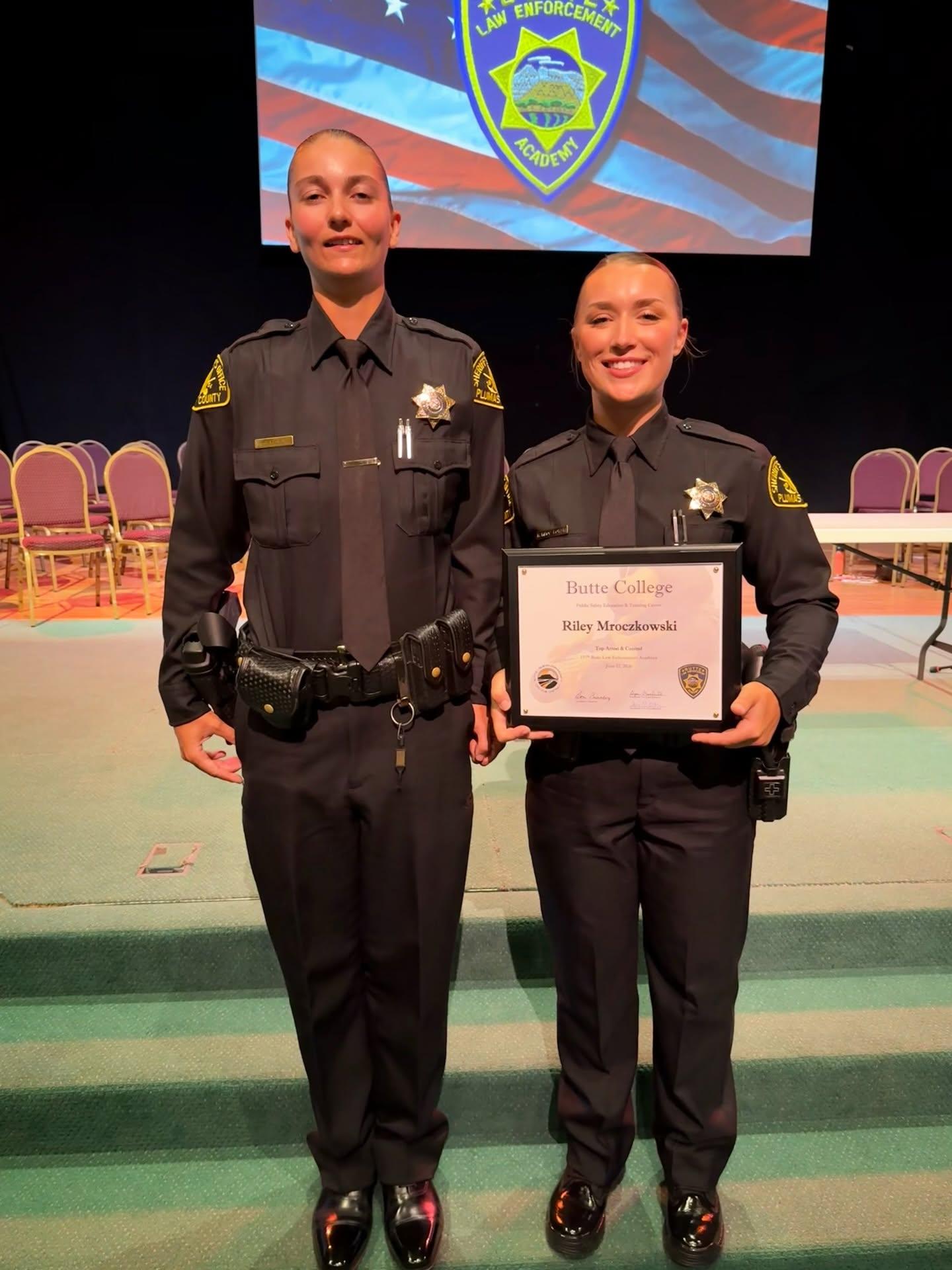
Left to right: Plumas County Deputy Rachael Fatheree and Deputy Riley Mroczkowski.
Plumas County also announced new academy graduates this week. The Plumas County Sheriff’s Office recognized Deputy Rachael Fatheree and Deputy Riley Mroczkowski after both graduated from the Butte College Law Enforcement Academy.
The Plumas County Sheriff’s Office described the achievement as the result of months of training, dedication, and perseverance. Mroczkowski was also recognized during the graduation ceremony with the Top Arrest & Control Award for her performance throughout the academy.
Other nearby agencies have made similar announcements this year. Nevada County’s Sheriff’s Office congratulated Deputy Jonathan Carrillo-Sandoval after his graduation from the Sacramento County Sheriff’s Basic Academy, while the Placer County Sheriff’s Office recently welcomed Deputies Colton Andrews and Jacob Fortner.
A law enforcement academy graduation marks more than the end of classroom work. The California Commission on Peace Officer Standards and Training, commonly called POST, identifies the regular basic course as the training standard for police officers, deputy sheriffs, school district police officers, district attorney investigators, and several other peace officer classifications.
POST says the basic academy is both physically and mentally challenging. Students must complete hundreds of hours of training and testing, including written exams, skills tests, exercise tests, scenario-based tests, and physical conditioning.
Regional academies carry out the requirement in different formats. Butte College says its POST-approved Law Enforcement Academy has been operating for more than 30 years, has graduated more than 5,000 students, and offers about 924 hours of instruction. College of the Siskiyous lists a three-module academy totaling 933 hours.
Academy training covers the foundation needed to enter patrol work, but graduation is not the end of a new deputy’s training. Many agencies hire recruits as deputy sheriff trainees before academy completion, then move graduates into sworn deputy positions after they complete a POST-certified academy.
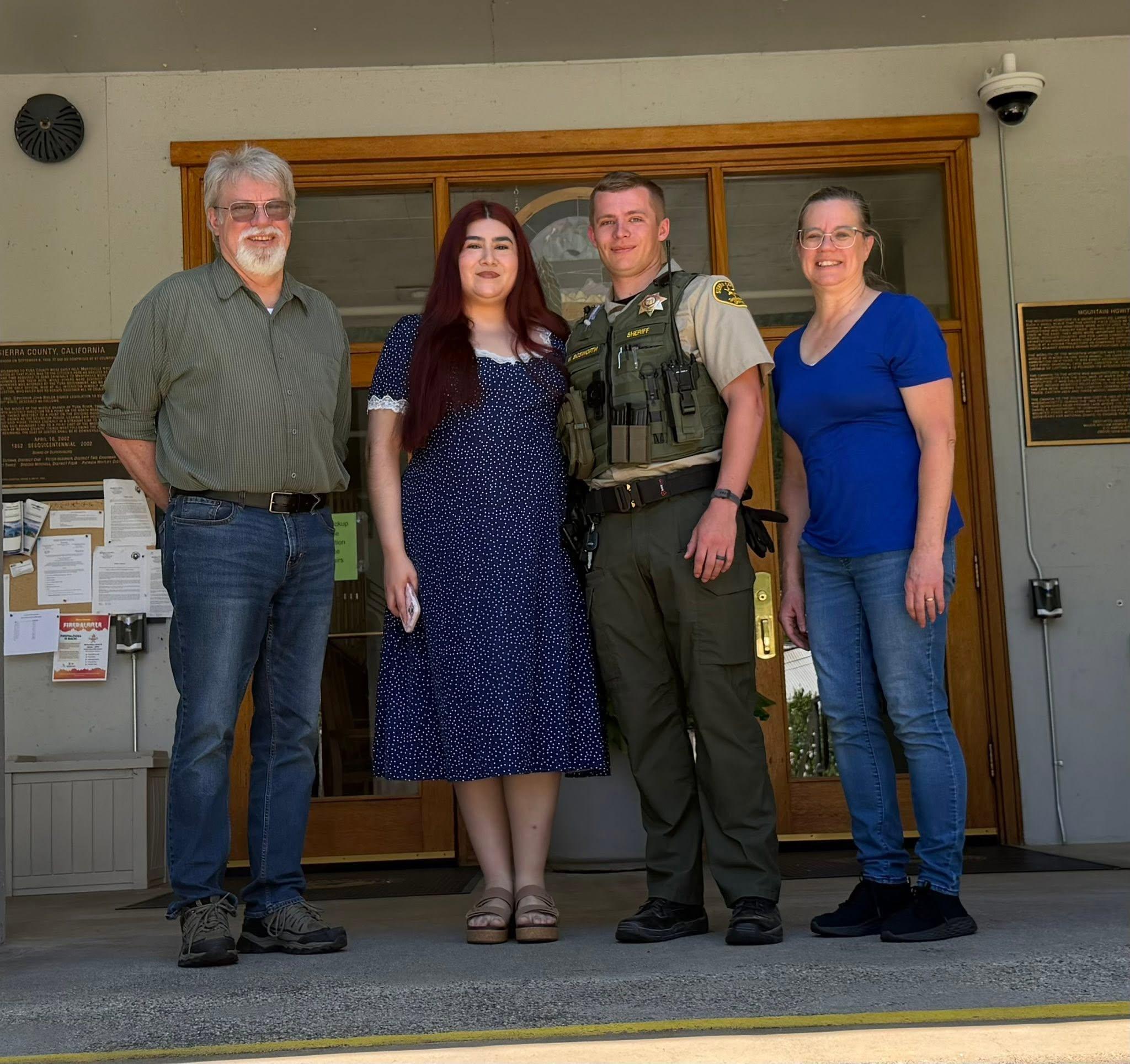
Deputy Bosworth with family at the Downieville Courthouse.
Once graduates return to their agencies, they generally continue into field training, probationary assignments, and department-specific instruction. For rural counties, the next stage includes learning local geography, radio systems, report writing procedures, agency policies, and the wide range of calls handled by small sheriff’s offices.