On this page
Candidates Face Audience Queries on Funding and Future of District 2
Attendees question candidates about raising taxes and supporting county staff.
4 min read
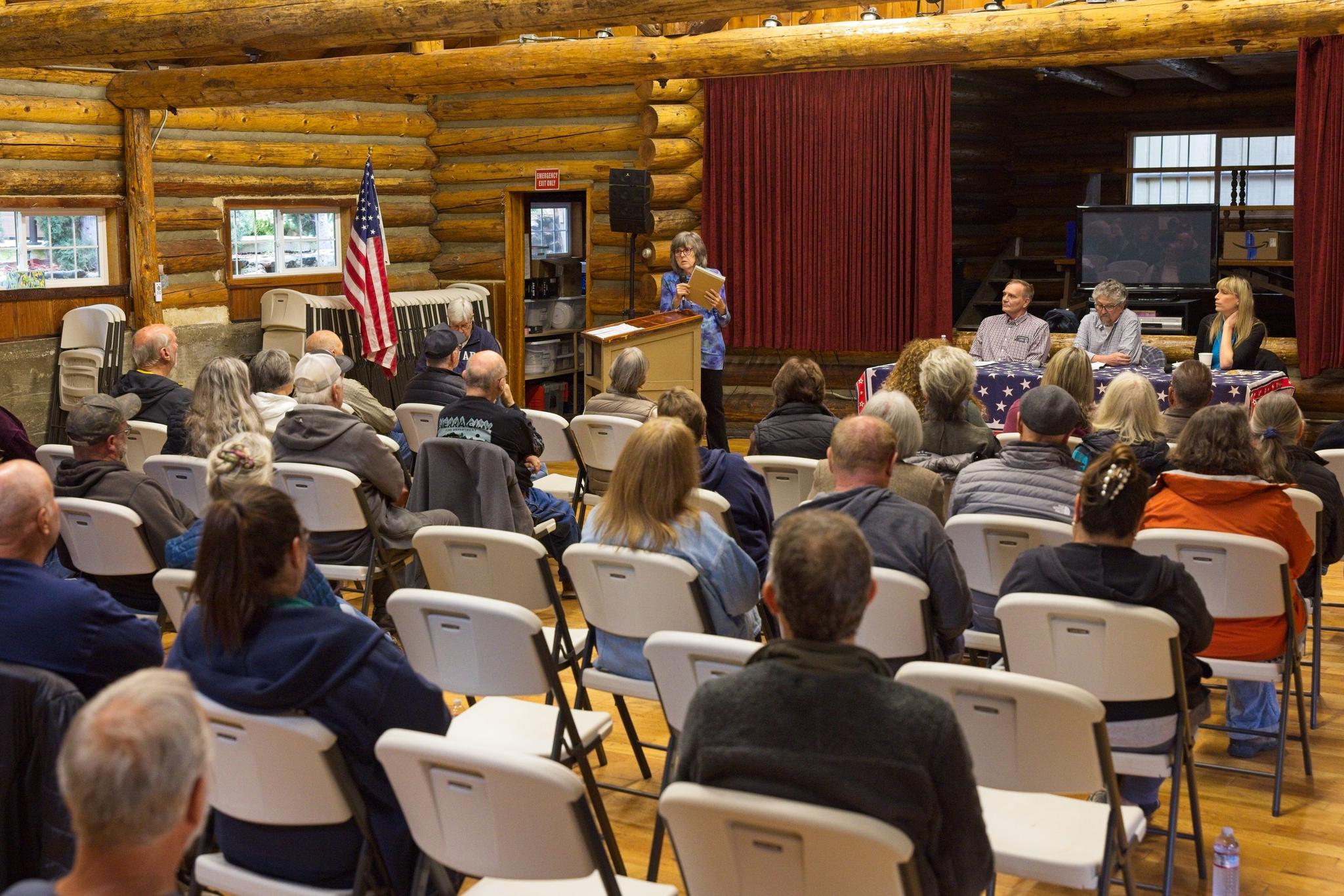
District 2 candidates face the audience at the April 28 public forum.
SIERRA CITY — The April 28 forum in Sierra City moved beyond prepared questions once moderator Bill Copren opened the floor to attendees. Voters raised pointed concerns about taxes, support for county employees, and long-term growth strategies.
Candidates Outline Detailed Visions for Sierra County’s Future #
Mary Nourse, a longtime resident who moved to the area in 1971, asked each candidate to describe their vision for the community’s future. Michael Ostrom said he would like Sierra City to return to its 1980 vibrancy when businesses thrived year-round. He stressed the need to educate newcomers about the seasonal nature of the local economy and to create more community events so residents could gather as they once did for barbecues and music at one another’s homes.
Bryan Davey pictured a revived sense of community with a full school bus again, packed community Christmas dinners in the hall, and streets filled during Oktoberfest. He emphasized revitalizing community events.
Sonya Meline focused on preventing the slow erosion of services that has occurred in places like Forest, California. She called for downtown revitalization in Sierra City so that stalled projects move forward, more restaurants open, and museum visitors linger to spend money locally. Meline also emphasized expanding healthcare access for seniors and hospice patients through Sierra Frontier Medical Resources while bringing younger voices into leadership roles through regular town halls.
Candidates Diverge on Taxes, Grants, and Economic Growth Strategies #
Glen Haubl, owner of Sierra Pines Resort, asked whether the candidates would support raising taxes or pursue other ways to increase the county’s revenue base. Sonya Meline said she would first convene the economic council she had proposed earlier to study options and develop pilot programs. She remained open to modest sales tax increases for parks and services as well as a targeted tax on second homes whose owners do not vote locally and contribute less to the year-round economy.
Bryan Davey stated he had no interest in raising taxes. He noted the county carries no debt and has operated responsibly under a conservative board for years. Economic development through greater participation on the Economic Development Committee, rather than new taxes, would bring additional revenue, he argued.
Michael Ostrom agreed that revitalization is needed, but preferred incentives such as temporary tax relief for new businesses over tax hikes. He suggested exploring whether county operations contain waste before considering increases and pointed to empty downtown buildings and an unsightly former gas station lot as areas needing cleanup to attract investment.
One attendee declared he would not vote for anyone proposing tax increases. He shared that he had once secured a personal grant exceeding the stated limit and urged the candidates to pursue similar aggressive grant writing for projects such as green waste chipping and transport, so property tax fees could be avoided.
Candidates Pledge Strong Support for County Employees #
Another question focused on how the eventual supervisor would support county workers who already wear many hats and face staffing shortages. Sonya Meline said county employees deserve recognition, training grants for upskilling, and an environment where they love their jobs. Bryan Davey credited the employees in his former Public Works department for his own successes and pledged to give them the tools, discretion, and respect they need. He described them as dedicated and underpaid. Michael Ostrom noted the county is short on snowplow drivers and other positions. He recommended comparing salaries with neighboring counties, adding staff where justified, and creating structured recognition through bonuses or project-based rewards instead of only acknowledging departures.
Ostrom Makes Specific Proposals on Communication and Recreation #
Michael Ostrom elaborated on a community radio station that could serve both economic and emergency purposes. When sirens sound during a fire, residents and visitors could tune in for evacuation routes and instructions even if power or cell service fails. He also proposed developing a county-owned parcel in Sierra City into a safe recreation area with basketball, pickleball, and volleyball courts so children have a place to play without walking along narrow roads while sledding in winter. Ostrom also proposed promoting the Pacific Crest Trail more aggressively and providing more facilities for thru-hikers. He credited PCT hikers for keeping Sierra City’s post office open.