On this page
District 2 Candidates Address Local Concerns at Sierra City Forum
Bryan Davey, Sonya Meline, and Michael Ostrom share backgrounds and policy ideas before June 2 primary.
8 min read
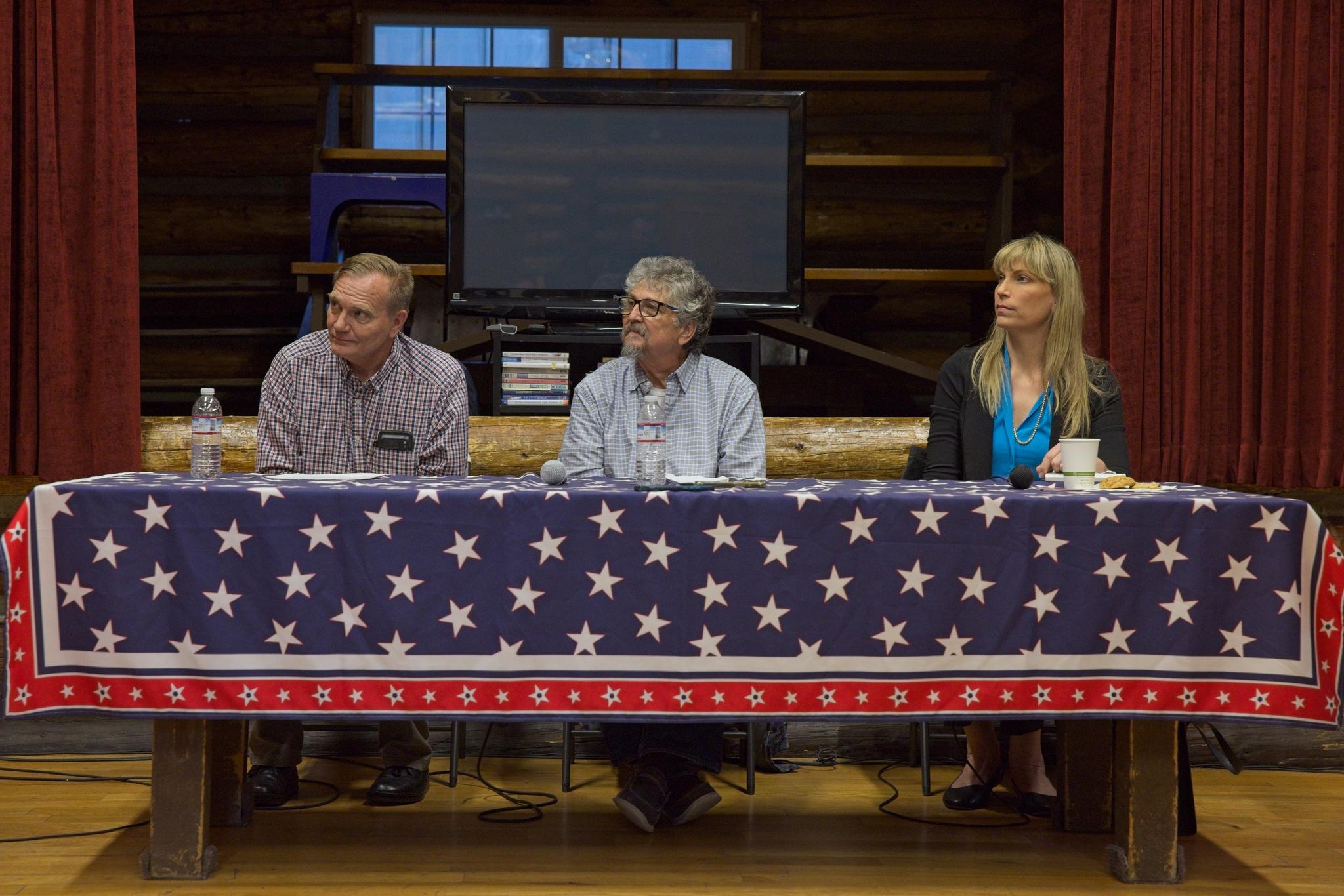
District 2 Supervisor candidates. Left to right: Bryan Davey, Michael Ostrom, and Sonya Meline.
SIERRA CITY — The Sierra County Democrats organized a nonpartisan candidate forum for the District 2 Board of Supervisors position on April 28 at the Sierra City Community Hall. The event was well attended, with roughly 50 community members present. District 2 covers an extensive and uniquely shaped portion of Sierra County that includes Sierra City, a portion of Loyalton, Verdi, Long Valley, and additional rural areas extending eastward to the Nevada state line. Bryan Davey, Sonya Meline, and Michael Ostrom are competing for the position in the June 2, 2026, primary election. County elections officials will begin mailing ballots to registered voters by May 4, 2026, according to the California Secretary of State.
Bryan Davey #
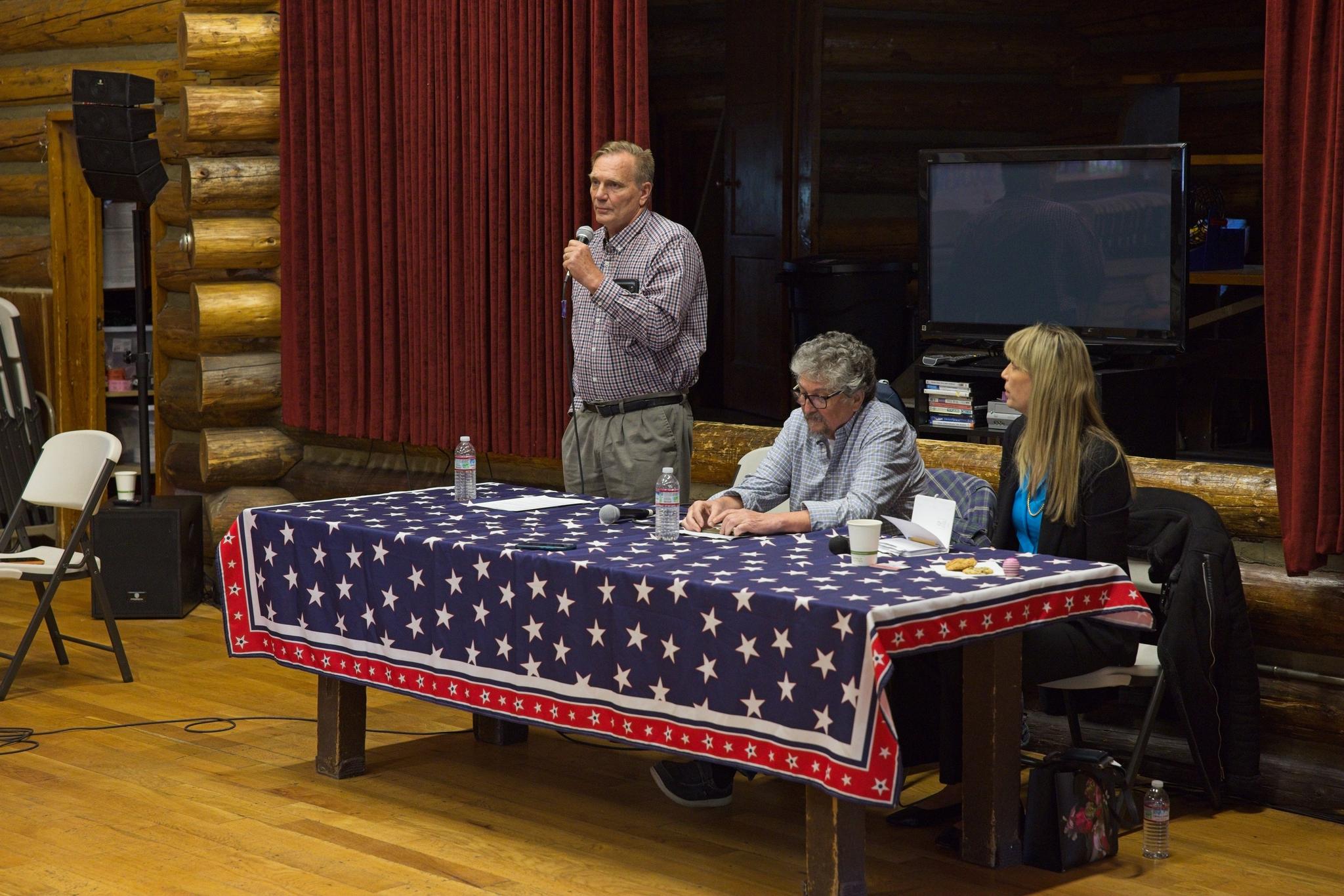
Bryan Davey described a career dedicated to public service in Sierra County that began when he arrived with his wife and son in 2004. He started as a deputy sheriff and moved to the Public Works Department in 2007. He became fire chief in 2008, advanced to deputy director of public works and then to director, and retired from that role last year while continuing as a firefighter until December. Several residents approached him about running after incumbent Lila Heuer chose not to seek reelection, and he says he made the decision to do so after family discussions and prayer.
Davey stressed that service forms the core of his candidacy. “I’m generally here to be of service to the community,” he said. He pointed to infrastructure projects he managed across the county and to the value of raising his son through the local school system from kindergarten through 12th grade.
Davey called for renewed public-private cooperation to strengthen the local economy. He urged reactivation of the county Economic Development Committee, which has sat idle for years, along with closer work alongside the Chamber of Commerce and the Historical Society. He also highlighted the county’s relationship with the U.S. Forest Service, noting that forest land makes up 90 percent of the west side of Sierra County. Davey cited the utility undergrounding project in Sierra City that secured extra Rule 20A funding and ongoing pedestrian improvements between upper and lower Sierra City as tangible results achieved through sustained effort.
Volunteer work has long been part of Davey’s life. He served many years in the fire service, participated in school parent-teacher organizations and booster programs, and helped with church and community tasks such as mowing the lawn at the community park and tending the visitor center garden.
On housing, Davey observed that Sierra County has no housing authority. Multifamily projects would demand major sewer and water upgrades, especially in Sierra City, where existing systems already operate under strain. He remained open to partnerships with private developers but questioned whether current timing and resources support such development.
Davey addressed population decline by promoting the area’s livability and the feasibility of remote work through Starlink and similar technologies. He argued that the county attracts outdoor enthusiasts prepared to accept the absence of urban conveniences such as chain restaurants.
His experience with grant writing covers eighteen years and includes awards for the Kentucky Mine Trestle restoration, Sierra Brooks water improvements, community hall upgrades, park projects under Propositions 68 and 40, and equipment purchases through USDA programs. As a supervisor, he says he would advise staff on grant strategy rather than manage individual projects.
Davey welcomed the recent removal of accumulated green waste at the transfer station, yet described the current burning method as labor-intensive and unsustainable. He suggested a better collection site because the existing access road poses difficulties for large vehicles. He proposed industrial chipping for sale to facilities such as SPI in Quincy or future cogeneration plants, development of a composting enterprise on county land in partnership with the Forest Service, and participation in regional biochar initiatives already underway in neighboring counties while preparing for likely state and federal limits on open burning.
Sonya Meline #
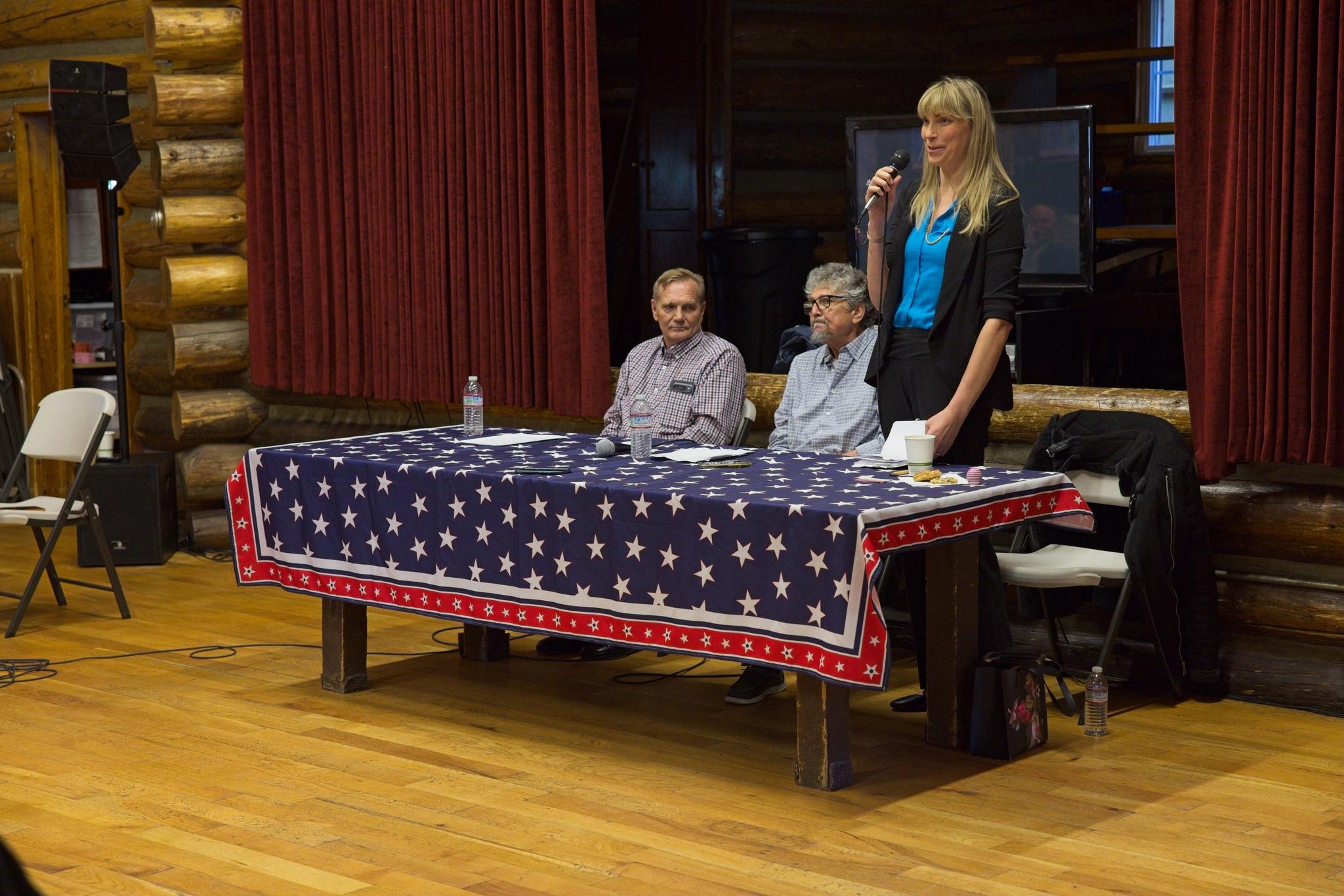
Sonya Meline opened her remarks by recounting conversations with District 2 residents that shaped her decision to run. A retired woman on a fixed income told her the community felt left behind, while a first-time voter described fear of drug use and nighttime violence that disrupted sleep. “We need leadership that shows up and listens,” Meline said. She and her husband followed a five-year plan to move to the mountains after adopting their son, living temporarily in a travel trailer while saving for a business. They purchased and renovated a hotel in Downieville, reopened an ice cream shop year-round, and created local jobs.
Meline outlined plans to form an economic council composed of District 2 residents and business leaders that would test ideas and launch pilot programs rather than merely study problems. She pledged to reduce barriers for local businesses, improve communication, and serve as a partner instead of a bottleneck. Quarterly town halls rotating between Verdi, Loyalton, and Sierra City would allow direct input from residents, including those unable to travel, who might prefer home visits.
Volunteer service runs through Meline’s background. She has organized events, including the Halloween history tour and Sierra County Arts Council programs, and serves on the board of Sierra Frontier Medical Resources, which provides paramedic coverage in western Sierra County. She received the Presidential Volunteer Service Award before moving to the county. “Communities like ours only work when people stand up and volunteer,” she stated.
Meline described administering a survey on housing that revealed widespread struggles among employers to retain staff because of limited affordable options. After presenting results to the Board of Supervisors and sending a letter to second-home owners, four homes entered the market, including the one she now occupies. She supports workforce housing that uses existing stock and believes education and outreach can continue to move the needle.
Population decline represents a symptom of deeper challenges, Meline argued. Reliable healthcare, functioning services, and predictable government attract young adults and businesses. She proposed programs such as moving-cost grants and better online directory optimization so that mapping services route visitors through Sierra City rather than around it.
Meline has secured more than $100,000 in training grants during prior work in Southern California and obtained a small-business grant in Sierra County. She emphasized the full cycle of identifying opportunities, building strong proposals, forming committees, and administering awards to meet all requirements and demonstrate success for future funding.
Meline and her husband hold permaculture certifications and maintain close ties with composting facilities in Nevada County. She acknowledged progress at the transfer station yet warned that volume, space limits, and upcoming California Air Resources Board restrictions on burning require proactive solutions. Options include community composting programs, senior pickup services, woody socks for flood control, pelletizing, tub grinders, and biochar production. “We need supervisors that are proactive in this way so we’re not stuck and have another literal logjam here where we can’t burn,” she said.
Michael Ostrom #
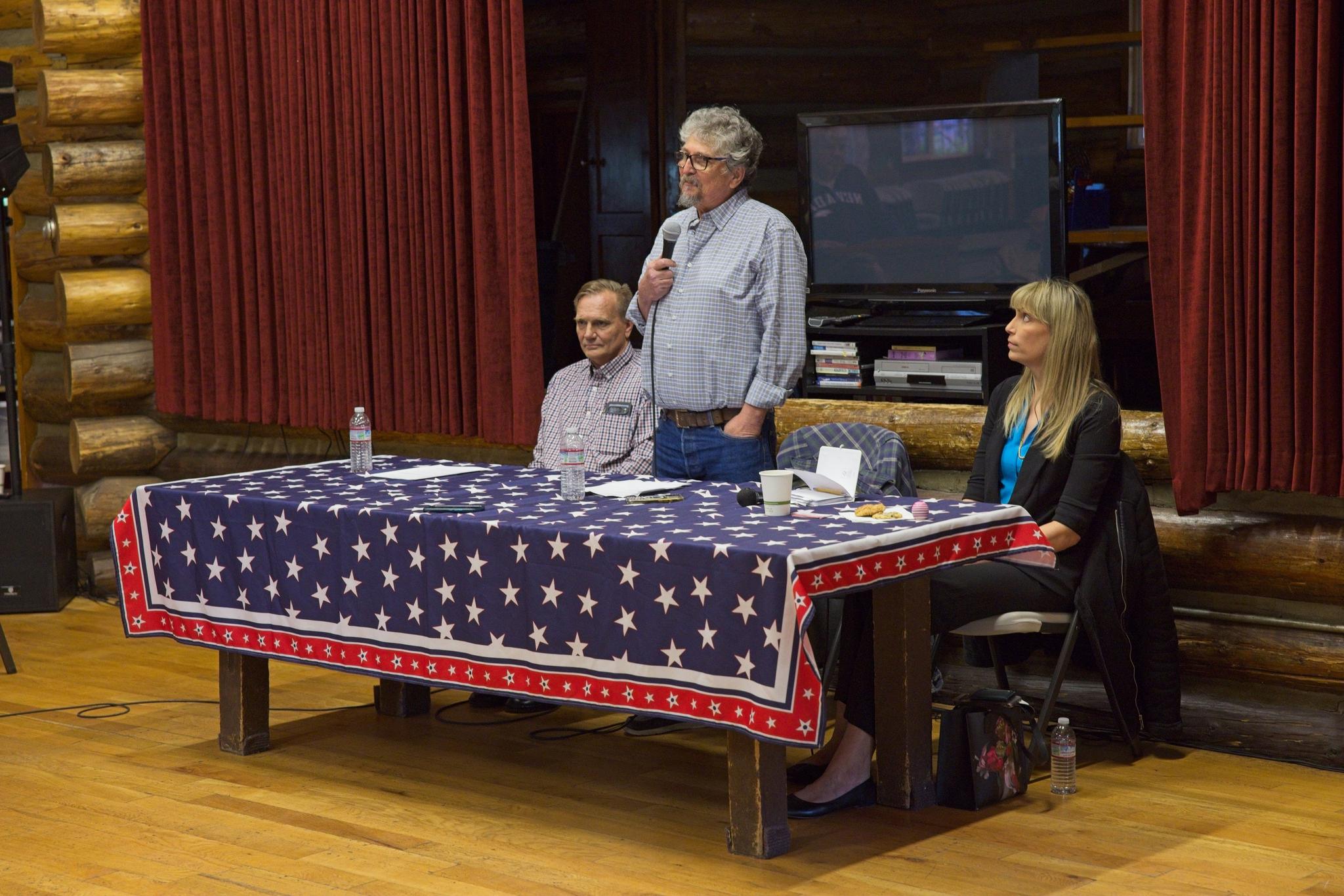
Michael Ostrom described deep roots in the community through family business and volunteer roles. In 1985, he volunteered with his family’s local water company, earned Grade 2 water treatment and distribution operator licenses, and later managed an environmental laboratory that grew annual sales from four hundred thousand dollars to $3.2 million within three years. He has belonged to the Lions Club for thirty years and currently participates in the small local chapter.
Ostrom wants Sierra City to regain the bustle and community activity he remembers from earlier decades. He proposed promoting the Pacific Crest Trail by offering facilities at the Wild Plum camp for thru-hikers to secure gear while visiting town. He also suggested a community radio station that could broadcast fire alerts and evacuation routes when power or phone service fails. “I want to see it come back to where it was,” Ostrom said.
On volunteer work, Ostrom says he provided unpaid service to his parents’ water company for years, and also plans to bring the Lions Club vision van to multiple Sierra County locations in June for free eye exams, blood pressure checks, and distribution of glasses to those in need. “I enjoy serving the community,” he stated. “I enjoy getting into groups and making things happen, and I’m proud to drive by things and say, ‘Yeah, we did that.’”
Ostrom acknowledged long-standing housing shortages that prevent qualified workers from staying. He viewed considering large-scale multifamily construction as premature. He says many properties currently sit on the market following post-pandemic purchases, and he favored attracting quality developers who could negotiate infrastructure contributions similar to a two-hundred-home project he worked on in Linden, California, that secured a million-dollar well system and additional acreage for wastewater treatment.
Keeping young people in the area matters as much as attracting newcomers, Ostrom observed. Remote work and the natural beauty of forests and lakes offer strong reasons to stay, yet the absence of urban amenities must be accepted. He recommended expanding west-side access to adult education programs, such as the culinary arts program in Loyalton, and offering modest incentives to new businesses.
Ostrom described grant writing as sophisticated project management that requires clear goals, timelines, and reporting. He managed grants during his water district years and would apply the same disciplined approach if elected, selecting backup funding sources when possible and ensuring full compliance to retain awards.
Green waste management requires both immediate removal of existing material and long-term alternatives to open burning, Ostrom said. He praised the new Public Works Director for burning more than 100 yards during a recent storm and suggested chipping operations that could sell material or break even while powering potential energy facilities. He says a better collection site would help, though none has been identified yet. He stressed the need to stay ahead of anticipated Environmental Protection Agency and California Air Resources Board restrictions that could eliminate burning.