Grass Valley Residents Challenge Flock Camera Surveillance
Community members cite privacy violations and data misuse at city council meeting.
3 min read
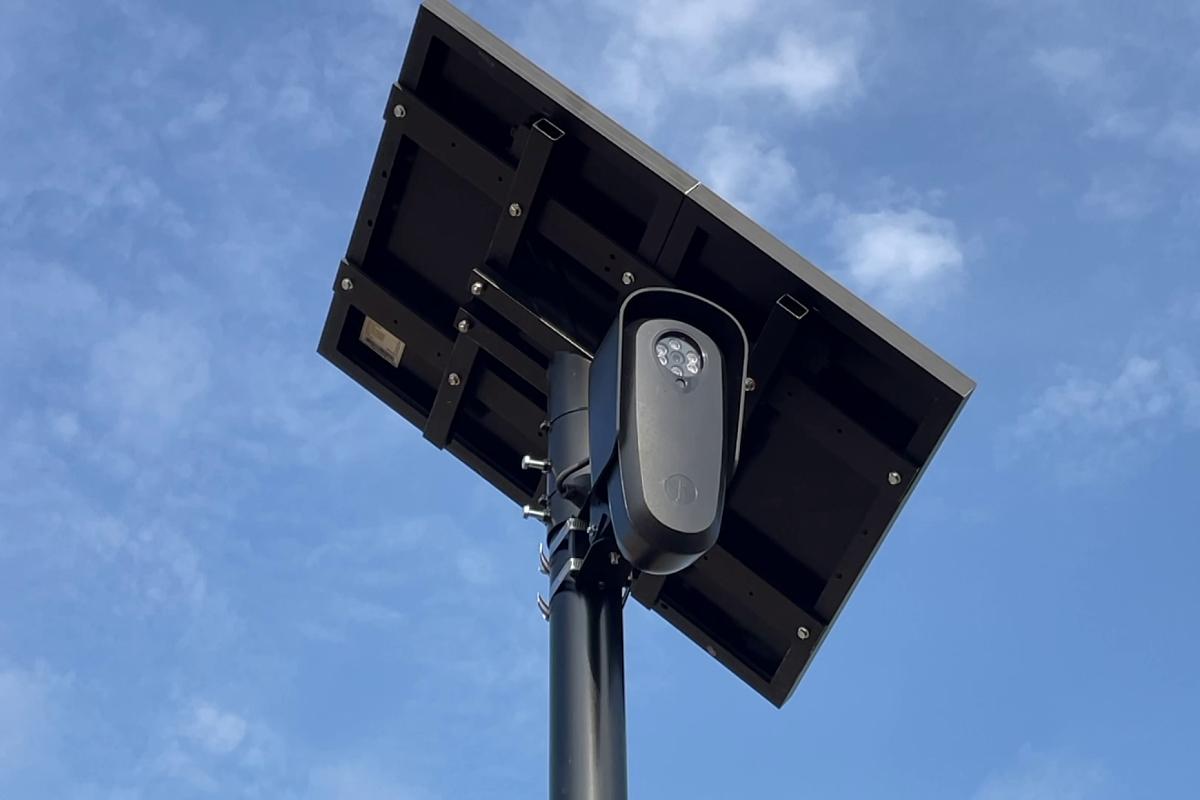
A Flock Safety camera, similar to those installed in Grass Valley.
GRASS VALLEY — Grass Valley residents packed the City Council chamber on May 26 to raise alarms about the city’s contract with Flock Safety for automated license plate reader cameras. Multiple speakers demanded that the council terminate the agreement immediately. The concerns centered on widespread data sharing and apparent violations of California law.
Flock Safety cameras are fixed automated license plate readers installed at strategic points of ingress and egress throughout Grass Valley. The system captures still images of passing vehicles, recording license plates, vehicle make, model, color, time, and location. Data feeds into a cloud-based platform and is retained for 30 days before automatic deletion. Law enforcement agencies across the country can search the network, which connects thousands of cameras nationwide.
The City Council first approved the Flock Safety contract in September 2021 for 18 fixed cameras, which went live in January 2022. In July 2023, the council authorized a five-year extension and expansion to 25 cameras total at a cost of $2,500 per device annually. City officials have described the technology as a tool to recover stolen vehicles and aid felony investigations.
Lindsey Nielsen, founder of a “Deflock” Working Group, presented findings from an 18-month public records request covering March 2023 through November 2025. She says the data showed 3.9 million individual searches against Grass Valley cameras by 357 outside organizations. The Grass Valley Police Department accounted for only a small fraction of the activity. Nielsen highlighted more than 1,000 searches explicitly tied to immigration enforcement agencies such as Homeland Security Investigations and Customs and Border Protection after California Attorney General Bulletin 2023-DLE-06 prohibited sharing automated license plate reader data with federal immigration authorities. Nielsen also pointed to nearly 24,000 searches logged with no legitimate purpose, including over 7,000 with blank reasons and thousands labeled simply “image download.” Several residents argued these gaps violate California Civil Code requirements for documented justifications and audit trails.
Multiple commenters referenced contract terminations in more than 30 other communities, including Austin, Denver, Santa Cruz, and Mountain View, as examples for Grass Valley to follow. Additional concerns included potential First Amendment violations arising from searches linked to protests and reports that the system enabled unauthorized tracking in other jurisdictions. Residents described the cameras as creating a dragnet that logs movements of ordinary drivers without consent or a warrant. One speaker noted that drivers cannot enter or leave Grass Valley along major roads without repeated scans.
Deputy Chief Steve Johnson of the Grass Valley Police Department announced a community meeting to address questions about the cameras. The session is scheduled for June 10 from 4 to 6 PM at the Love Building in Condon Park, 660 Minnie Street. Officials said they will present information from prior public records responses and answer questions from residents.