Lassen Sheriff Opposes Prison Closure Plan
Budget negotiations could determine another facility’s future.
6 min read
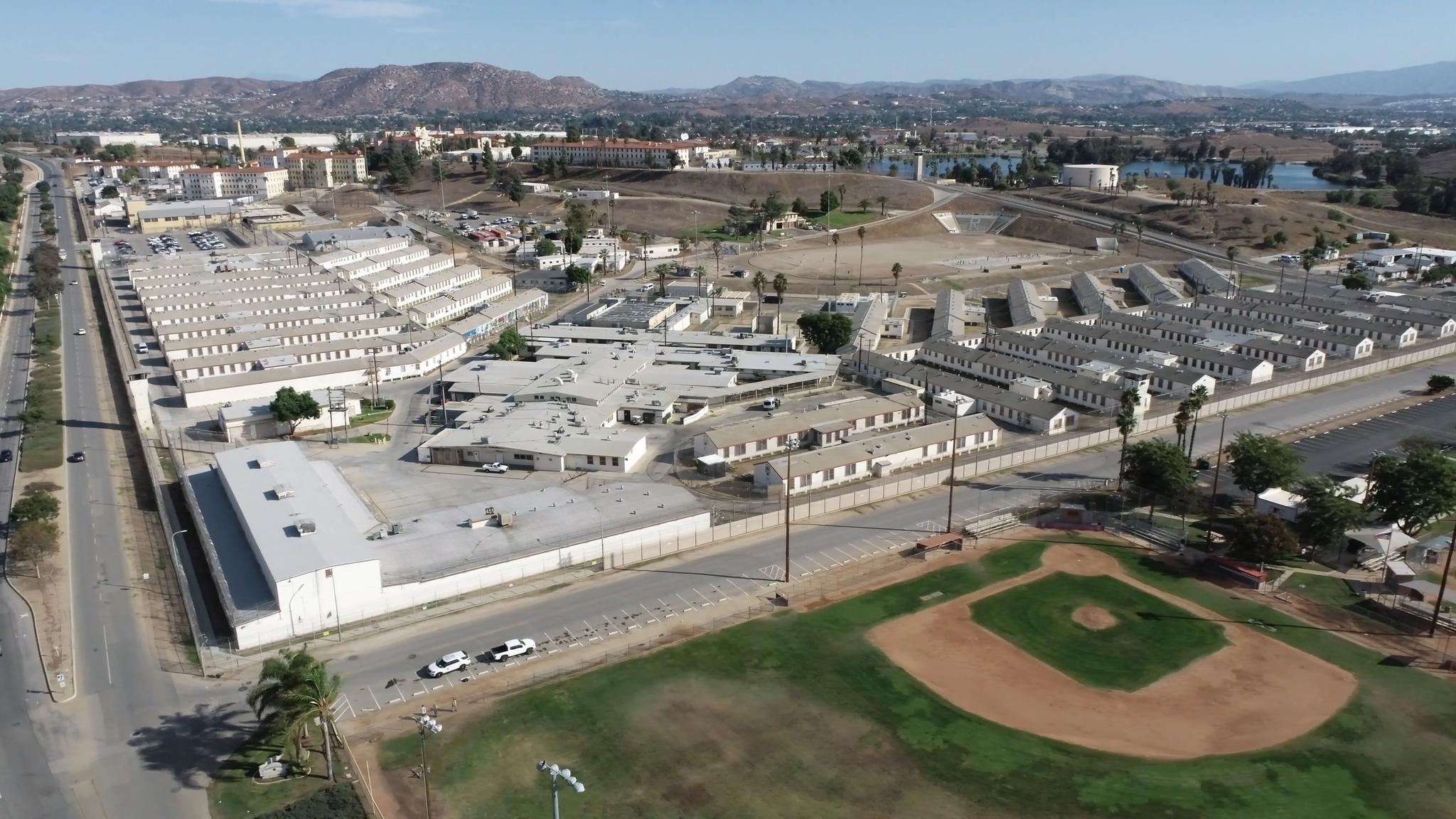
The CDCR facility in Norco, pictured above, is already slated for closure. Another facility may follow. Credit: CCHCS.
LASSEN COUNTY — Lassen County Sheriff John McGarva is opposing a state budget proposal that could lead to another California prison closure, saying rural counties already understand the lasting effects of state prison downsizing.
The proposal does not name a specific prison, and no new closure has been finalized. The Legislature approved its version of the 2026-27 state budget on June 15 with assumed savings from an additional prison closure included, but the issue now depends on final negotiations with Governor Gavin Newsom.
Newsom’s May budget revision did not call for another closure beyond the California Rehabilitation Center in Norco, which is already scheduled to close by fall. For an additional prison to close, the final budget package would need to keep the Legislature’s proposal in place. The California Department of Corrections and Rehabilitation would then have to select a facility and begin the work of shutting it down.
The proposal could also be dropped before the budget is finalized. The Governor and legislative leaders could remove the closure language or related savings from the final agreement, and the Governor could reduce or eliminate budget items before signing the spending plan. Budget trailer bills, which make legal changes needed to carry out the budget, could also affect how the plan moves forward.
California has already reduced its prison system in recent years as the number of people incarcerated by the state has fallen sharply. Since 2021, the state has closed Deuel Vocational Institution in Tracy, California Correctional Center in Susanville, and Chuckawalla Valley State Prison in Blythe. The state also ended its lease at the California City Correctional Facility and deactivated portions of other prisons.
The state prison population peaked at more than 173,000 people in the mid-2000s. By December 2025, the population had fallen to about 90,600 people. CDCR’s weekly report for June 17 showed about 89,400 people in state custody or CDCR reentry program supervision, including about 88,100 people in prisons and camps.
The decline came from several major changes in California criminal justice policy. A federal court order over prison overcrowding forced the state to reduce its prison population. In response, California approved public safety realignment in 2011 through AB 109, which shifted many lower-level felony sentences from state prisons to county jails and local probation departments.
Voters later approved Proposition 47, which reduced several drug and property crimes from felonies to misdemeanors, and Proposition 57, which expanded parole consideration and credit-earning opportunities for some incarcerated people. Pandemic-era court delays, releases, and jail booking changes also reduced the number of people held in custody.
More recently, voters approved Proposition 36 in 2024, increasing penalties for some drug and theft offenses. CDCR expects the measure to increase prison admissions in the near term. Even with Proposition 36 factored in, the department still projects the prison population will keep trending downward over the next several years.
The same policy shift has also sent more money toward alternatives to incarceration. Proposition 47 requires savings from reduced incarceration to go into behavioral health treatment, substance use disorder treatment, diversion, school support, and victim services. More than $800 million in Proposition 47 savings has been allocated statewide since 2016, with recent grants supporting local treatment, housing assistance, job training, civil legal services, and reentry programs.
For supporters of additional closures, the numbers show California no longer needs as many prison beds as it once did. For law enforcement groups, the same changes raise a different concern: county jails and local agencies are taking on responsibilities that used to fall more heavily on the state.
Lassen County has been through the closure process before. California Correctional Center in Susanville was fully deactivated on June 30, 2023, after a long legal and political fight. Local officials and labor representatives argued the closure would damage the economy of a remote community where prison jobs had been among the most stable and best-paying positions available.
McGarva said the latest proposal is part of a broader pattern that puts more pressure on rural communities. “The burden this continues to place on our rural facilities is upsetting and frustrating coming from the State Capital,” he said. He added that his office is working with law enforcement partners across California “to prevent more closures and relocation of offenders from the state to the counties.”
The statement circulated by the Lassen County Sheriff’s Office included opposition from the California Police Chiefs Association and the California State Sheriffs’ Association. The groups said California has reduced its prison population while shifting more responsibility for long-term incarceration onto county jails.
“California cannot continue shrinking its prison system while expecting county jails to absorb the consequences,” the associations said. They argued that local jails were not designed to house people for years at a time and said another closure could worsen overcrowding, legal exposure, operating costs, and public safety pressures.
Correctional officers have also opposed additional closures. California Correctional Peace Officers Association President Neil Flood told The Sacramento Bee that closing another prison would make it harder for the state to provide rehabilitation programs. “They’ve promised their constituents a system that does a better job preparing people in prison to come home rehabilitated,” Flood said. “They can’t keep that promise while continuing to shut down the places where that work is done.”
Supporters of another closure point to falling prison populations and the cost of maintaining aging facilities. The nonpartisan Legislative Analyst’s Office has said California could close another prison within the next few years while still keeping a buffer for unexpected population increases. The office estimated that another closure could save about $150 million a year in operating costs and help the state avoid future infrastructure spending at the closed facility.
The LAO also identified the Correctional Training Facility in Soledad as a strong candidate for closure unless the administration selects a different facility. Analysts noted that the prison has pending infrastructure needs, including water-related projects, and said spending on major repairs could be wasteful if the facility later closes. State officials have not selected Soledad or any other prison under the current proposal.
Prison-closure advocates argue that savings should be redirected to housing, health care, food assistance, reentry programs, and other public services. Californians United for a Responsible Budget, a coalition that supports reducing prison spending, praised the Legislature for putting another closure into the budget debate. Dax Proctor, the coalition’s statewide coordinator, said California “cannot afford to keep pouring money into empty prison beds while families are being told there is not enough money for housing, health care, food, and basic support.”
Other advocacy groups have made similar arguments. The Ella Baker Center for Human Rights supported the Norco closure and has urged state leaders to keep reducing the prison system’s footprint, citing declining prison populations, aging infrastructure, and climate risks. The California Budget & Policy Center has also argued that prison closures are an underused budget tool.
No incarcerated people would be released solely because a prison closes. In past closures, CDCR has transferred incarcerated people to other institutions and offered affected employees transfer options, hiring preferences, or other workforce support. For rural communities, however, a closure can still mean the loss of hundreds of state jobs and a major source of local economic activity.
The question now rests with the final state budget agreement. If the Governor and legislative leaders keep the proposal in place, CDCR would have to move from general budget planning to selecting a specific facility. If the final budget drops the proposal, the Norco closure would remain the only full state prison closure currently scheduled.