Plumas National Forest Tightens Fire Rules
Stage II restrictions limit campfires, smoking, and vehicle use forestwide.
3 min read
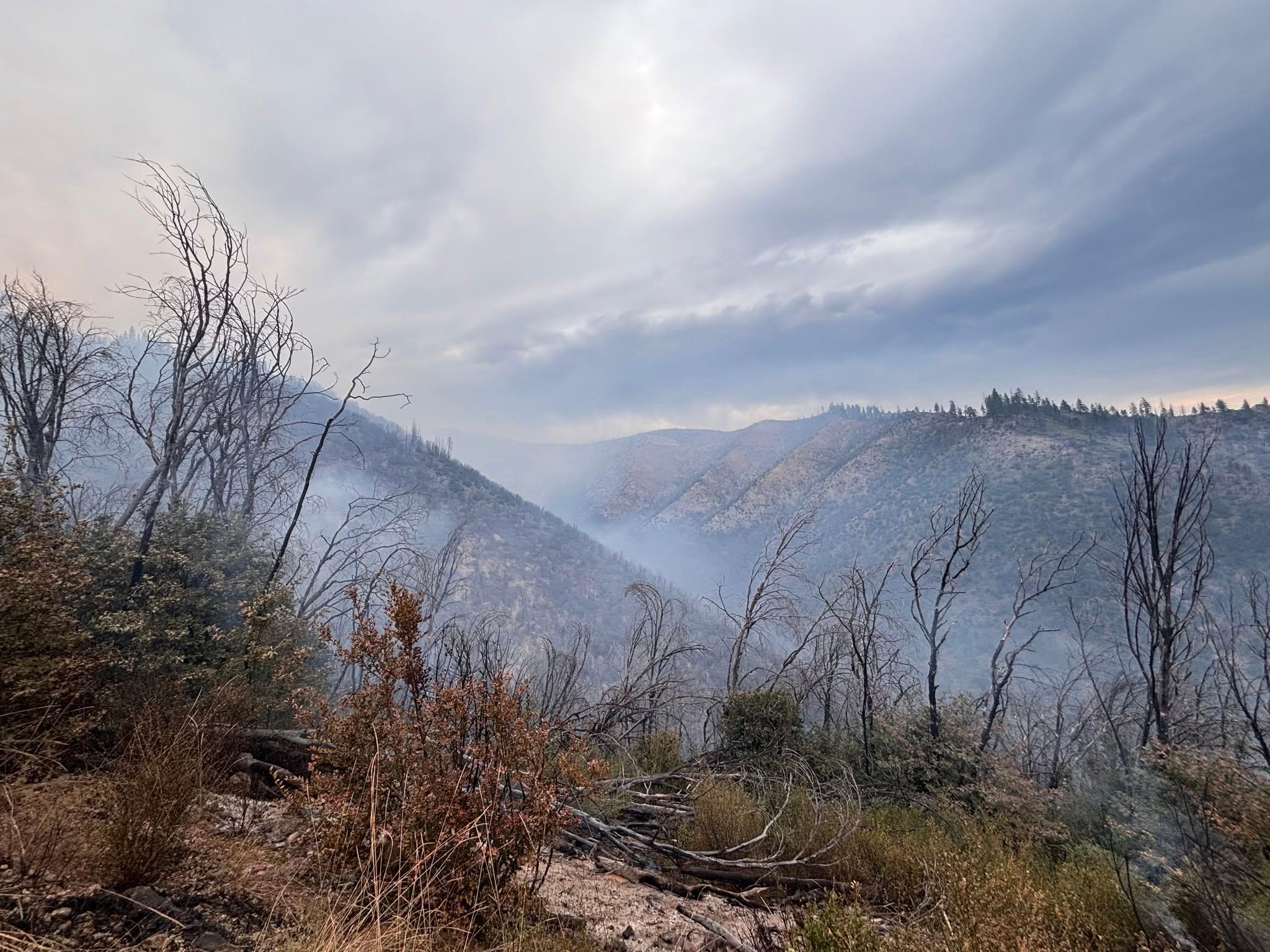
Smoke from the Twain Fire on the Plumas National Forest in July. Photo: Plumas National Forest.
QUINCY — The Plumas National Forest moved into Stage II Fire Restrictions on Wednesday, August 5, sharply narrowing where visitors may build a campfire, smoke, or run a motor. Forest officials said hot, dry temperatures over the past several weeks have pushed fire danger higher. The order tightens the Stage I restrictions the forest adopted on Thursday, July 9.
“We are in the heart of fire season right now with dry conditions, hot temperatures and receptive fuels,” said Plumas National Forest Fire Management Officer Martin Senter. “With this increased risk of wildfire, we need the public’s help to prevent human-caused wildfires.”
Nearly all of the wildfires on the forest this year have been human-caused, the Forest Service said, including abandoned campfires and burn piles that were out of compliance. Senter said the basic precautions still apply wherever fires remain allowed. “Even if you have a campfire in an allowable recreation area, it is still critical to make sure 3 feet around the fire ring is clear of any flammable material, it is never left unattended, is dead out and cold to the touch before leaving,” he said.
Under Stage II, campfires are permitted only at designated recreation sites that have a campground host, and only in established campfire rings. Smoking is allowed only inside an enclosed vehicle or building, at one of the permitted recreation sites, or in an area at least three feet in diameter that is completely clear of flammable material.
Internal combustion engines, including vehicles and generators, may be operated only on designated roads and trails. Welding and the operation of an acetylene or other open-flame torch are prohibited outright.
Chainsaw use for firewood cutting continues, with the understanding that operating a chainsaw off designated roads and trails will be kept to a minimum. Woodcutters must check the forest’s woodcutting status each day before cutting by calling 1-800-847-7766.
A valid California Campfire Permit does not exempt the holder from any of the prohibitions. Permit holders may still use approved devices in an area at least three feet from flammable material, including portable campfire pits, stoves, and lanterns that burn gas, kerosene, jellied petroleum, or pressurized liquid fuel and have a working shut-off valve. Wood pellet-fueled grills and similar devices with a functional on-off switch also qualify. The permits are free at Forest Service and CAL FIRE offices and online at permit.preventwildfiresca.org.
Senter tied the tighter rules to a strained firefighting season. “As we move into Stage II Fire Restrictions and with firefighting resources assigned to wildfires across the West this summer, it is even more important to help prevent wildfires,” he said.
The forest’s largest fire so far this year, the Twain Fire, started July 11 north of the Feather River Highway and burned 276 acres before crews contained it on July 20. Its cause remains under investigation. A separate closure order covering Forest Road 26N18, also known as Kingsbury Grade, has been in place near the burn area since July 21.
Violations of the restrictions are punishable by a fine of not more than $5,000 for an individual or $10,000 for an organization, imprisonment for not more than six months, or both. Suspected wildfires can be reported by calling 911.